

Texas Hold’em Tutorial: Essential Tips and Secrets to Becoming a Poker Master
Texas Hold’em Tutorial: Want to win consistently at online poker? Transitioning from live games to online play can be challenging, even for those who dominate traditional poker tables. However, there are numerous tools, techniques, and strategies that can simplify the learning process and improve your success rate online.
A successful Texas Hold’em player must do more than just understand the basic rules of attack and defense — they must also recognize and counter different types of opponents and their playing styles. Poker is a game of adaptation and observation, where each situation may require a unique approach.
By following the techniques outlined below, you can enhance your poker skills and increase your profits. These strategies are ideal for beginners, yet even seasoned professionals often revisit these principles as reminders of the fundamentals that separate good players from great ones.
Learn the Basics and Build a Strong Foundation
Texas Hold’em is a highly challenging and thrilling card game that combines probability, psychology, and decision-making. Whether you are a beginner or an experienced player, achieving long-term success in poker requires a solid understanding of the fundamentals. Below are several key concepts that will help you quickly get started and lay the groundwork for becoming a true Texas Hold’em expert.
1. Know the Hand Rankings
In Texas Hold’em, the strength of hands is ranked from highest to lowest as follows:
Royal Flush, Straight Flush, Four of a Kind, Full House, Flush, Straight, Three of a Kind, Two Pair, One Pair, and High Card.
Straight Flush: Five consecutive cards of the same suit (e.g., ♠A ♠K ♠Q ♠J ♠10).
Four of a Kind: Four cards of the same rank (e.g., four Aces and one King).
Full House: Three cards of one rank and two cards of another (e.g., three Aces and two Kings).
Familiarizing yourself with these combinations is essential — it determines how you assess your own hand and make strategic decisions against your opponents.
2. Understand the Game Flow and Betting Structure
A typical Texas Hold’em game includes 2 to 10 players.
Before cards are dealt, players post blinds (mandatory bets that initiate action).
Each player then receives two hole cards, and the game proceeds through four betting rounds:
Pre-Flop, Flop, Turn, and River.
During each round, players can choose to call, raise, check, or fold, depending on the situation and their hand strength. Understanding this structure is key to timing your moves effectively and avoiding costly mistakes.
3. Master Betting Strategies and Decision-Making
To play Texas Hold’em successfully, you must learn how to evaluate hand strength, analyze the board, and adjust your betting strategy accordingly.
Pre-Flop: Play cautiously with weaker hands to avoid unnecessary chip loss.
Post-Flop: Reassess your position based on the community cards and your hand’s potential.
Turn & River: Use your observation skills to infer your opponents’ possible hands and act decisively — either to extract value or minimize losses.
💡 Tip:
Don’t just rely on luck — learn and use the proper Texas Hold’em terminology to communicate clearly and think like a professional. Mastering the language of poker will keep you from being seen as a beginner at the table.
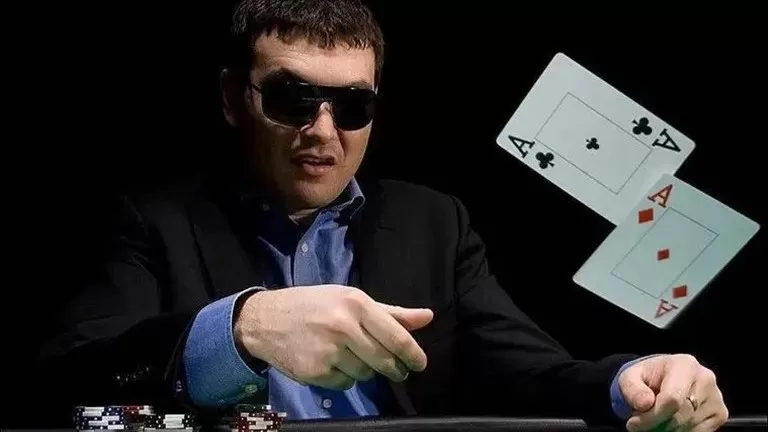
Use Psychological Analysis to Simplify and Win with Ease
Texas Hold’em isn’t just a contest of card skills—it’s a test of mental fortitude. If you want to become a top player, mastering and applying psychological analysis will help you break down opponents’ defenses and win with ease. Below are key psychological techniques to unlock consistent success:
1.Identify Opponent Types
Every player has distinct behavioral patterns and psychological traits. By observing actions, expressions, and betting habits, you can classify opponents—tight, loose, aggressive, passive, etc.—and tailor strategies accordingly.
2.Read Your Opponent’s Thought Process
Beyond labels, grasp how they think. Some prefer betting early, others late; some bluff frequently, others under-represent strength. Study behavior and betting tendencies to infer their mindset and make better decisions.
3.Exploit Psychological Weaknesses
After understanding type and thought patterns, target specific leaks—impatience, fear of big pots, ego-driven calls, tilt, or aversion to risk. Adjust pressure, sizing, and timing to capitalize on these weaknesses.
4.Stay Calm and Rational
Emotional play leads to mistakes. Maintain composure, analyze situations objectively, and don’t let table talk or opponent antics provoke you. With a cool head and clear logic, you’ll make correct decisions and convert them into wins.

Adapt and Conquer: Mastering Strategic Flexibility in Texas Hold’em
In Texas Hold’em, there’s no universal formula for guaranteed victory. Every opponent and situation is different, requiring you to draw from a deep strategic arsenal and adapt to shifting dynamics. True poker mastery lies in flexibility—knowing when to change gears and how to respond to each scenario effectively. Remember, adaptability is the hallmark of every great poker player. The ability to think on your feet and adjust your strategy is what separates champions from the rest.
1. Know Your Opponents
Understanding your opponents is one of the most critical skills in poker. Without recognizing their tendencies, strengths, and weaknesses, you can’t choose the right counter-strategy.
Carefully observe betting patterns, raise frequencies, and fold rates to identify styles.
For example, if a player consistently places large bets, it may signal strong confidence—or a bluff.
Once you’ve identified their tendencies, you can tailor your approach accordingly, exploiting weaknesses and maximizing your chances of success.
2. Adjust Your Strategy
Your strategy should never remain static.
If your opponent plays tight and cautious, adopt a more aggressive approach—raising and betting more often to pressure them into folding.
If your opponent is overly aggressive, counter with patience and control, calling strategically and waiting for opportunities to trap them.
Dynamic adjustment to both your opponent’s style and the evolving board texture will give you a decisive edge in the game.
3. Stay Calm and Disciplined
Discipline and composure are essential at the poker table. Emotional reactions often lead to costly mistakes.
Avoid letting frustration, anger, or overconfidence dictate your decisions.
By maintaining emotional control and sticking to sound logic, you’ll make sharper, more rational choices—protecting your chips and increasing your long-term profitability.
🎯 Pro Tip:
Poker is not just about the cards—it’s about reading, adapting, and executing.
Stay observant, stay flexible, and stay in control. That’s how you take command of the table and dominate the game.
Master the Math: Predict Odds, Control Risk, and Gain the Winning Edge
In Texas Hold’em, mathematics is more than just a supporting element—it’s the backbone of strategic decision-making. By applying the right formulas, players can predict probabilities, assess profitability, and gain a decisive edge over their opponents. Below are some essential mathematical concepts every poker player should know.
1. Win Rate Formula
Win Rate = (Number of Pots Won / Total Games Played) × 100%
Your win rate reflects your overall skill level and consistency.
The higher your win rate, the stronger your edge at the table. Tracking this metric helps you identify leaks in your strategy and measure long-term improvement.
2. Pot Odds Formula
Pot Odds = (Total Pot Size / Amount to Call)
Pot odds show the ratio between the potential reward and the cost of a call.
If the odds of completing your hand are better than the pot odds offered, it’s mathematically profitable to call. Understanding this relationship is key to avoiding poor decisions driven by emotion or guesswork.
3. Expected Value (EV) Formula
EV = (Winning Probability × Amount You Win) – (Losing Probability × Amount You Lose)
Expected Value is the average profit or loss you can anticipate over time.
A positive EV means your decision is profitable in the long run. Mastering EV allows you to make rational choices even when individual outcomes are uncertain—true poker success is built on positive EV decisions, not short-term luck.
4. Probability Formula
Probability = (Number of Favorable Outcomes / Total Possible Outcomes)
Probability helps estimate how likely a specific event or card will appear.
For example, you can calculate the chance of hitting a flush or a straight, or assess how likely your opponent has a certain hand based on betting patterns.
Using Math to Win More Hands
Texas Hold’em is a blend of art and science. Understanding these formulas helps players make smarter calls, folds, and bluffs.
Use the win rate formula to evaluate your progress.
Apply pot odds to determine if a call is mathematically sound.
Calculate EV to assess risk and reward before committing chips.
Use probability to forecast community cards or opponent ranges.
Predict, Control, and Profit
Mathematics also aids in reading opponents and controlling losses:
Analyzing bet sizes and timing gives clues about opponents’ possible hand strength.
Using EV and pot odds prevents unnecessary losses by keeping decisions grounded in logic, not emotion.
🎯 Conclusion:
Numbers don’t lie.
By mastering key poker formulas, you’ll not only sharpen your analytical edge but also develop the ability to predict outcomes, control risks, and make profitable moves consistently—turning Texas Hold’em from a game of chance into a game of calculated mastery.

Chip-Winning Strategies in Texas Hold’em
In Texas Hold’em, mastering the art of winning and managing chips is crucial. To become a successful poker player, you must develop effective chip management skills. Below are key techniques to help you gain an advantage at the table.
1. Control Your Bets Strictly
Bet cautiously and avoid committing too many chips too early.
Adjust your bet size based on your hand strength and table position.
Avoid chasing losing hands—know when to fold and cut your losses.
Adapt your betting strategy to the situation: bet more when the odds are in your favor, and less when conditions are risky.
2. Take Advantage of Position
Positional advantage refers to the edge a player gains depending on where they sit at the table.
Players in later positions have a strategic advantage because they can observe others’ actions before making their own decisions.
Use this to your benefit—bet, raise, or fold at the right time based on the information available. Maximizing your position can significantly increase your chances of winning chips.
3. Use Psychological Tactics
Texas Hold’em is not just about luck and skill—it’s also a battle of psychology.
Players can use mind games to influence their opponents’ actions, prompting mistakes that work in their favor.
Common psychological tactics include bluffing, intimidation, and trapping.
Mastering these techniques allows you to manipulate the table dynamic and gain a competitive edge.
Conclusion
Winning chips is an essential part of success in Texas Hold’em.
By controlling your bets, leveraging positional advantage, and using psychological warfare, you can dramatically improve your win rate.
Master these strategies, and you’ll stand out at the poker table—on your way to becoming a truly successful player.
Conclusion
Through this guide, we have embarked together on a journey into the world of Texas Hold’em — from basic knowledge to advanced techniques, uncovering the fascinating depth of this game step by step. Texas Hold’em is both a science and an art.
The science lies in its structured rules and strategic foundations; the art lies in the creativity, intuition, and psychological composure that players must apply to navigate ever-changing situations.
Texas Hold’em is a skill that demands continuous learning and practice. As your experience grows, so will your understanding of the game.
We hope this guide has helped you grasp the essential concepts and strategies needed to elevate your play and achieve greater success at the tables.
Remember — mastery doesn’t come overnight. It takes consistency, patience, and reflection.
May your journey in Texas Hold’em be one of growth, insight, and victory — and may you become a true master of the game! ♠️
Quick FAQ: Common Questions About Texas Hold’em
1. How can I become a skilled Texas Hold’em player?
To become an excellent poker player, you must first master the rules, hand rankings, and strategic fundamentals of Texas Hold’em. Learn to choose the right hands and develop flexible strategies.
Equally important is understanding psychological tactics—reading opponents, spotting patterns, and controlling your own emotions.
Finally, consistent practice and reflection are key. The more experience you gain and the stronger your mathematical and analytical skills, the better you’ll become at evaluating situations and making profitable decisions.
2. What is the most important skill in Texas Hold’em?
One of the most crucial skills is learning to leverage positional advantage—acting later in the betting round gives you more information to make smarter moves.
Next, cultivate emotional control; staying calm under pressure separates amateurs from professionals.
Lastly, master the art of bluffing—knowing when and how to deceive your opponents is what often turns a good player into a great one.
3. What common mistakes should I avoid in Texas Hold’em?
Several frequent mistakes can cost players valuable chips:
Overvaluing your hand – Even strong hands can lose; always consider your opponent’s possible range.
Letting emotions dictate play – Tilt leads to poor judgment; stay composed regardless of wins or losses.
Calling blindly – Don’t chase every pot. Base your decisions on hand strength, position, and pot odds rather than impulse.
Avoiding these errors will help you play more strategically, preserve your bankroll, and steadily improve as a Texas Hold’em player. ♣️
Red Dragon Poker APP Officially Launched
The long-established tournament brand Red Dragon Cup has now released its own app — “Red Dragon Poker.”
The Red Dragon Cup is a well-known Asian poker brand with a strong reputation across the region. Originating in Macau, it quickly became one of the most influential poker events in Asia. Red Dragon Poker tournaments regularly attract players from all over the world, offering massive fields and impressive prize pools.
For those interested, we highly recommend downloading the “Red Dragon Poker” app to join more exciting tournaments.